
Does it really matter what we call it? Does it matter at all?
It has always amused me how easily people get stuck on words. Entire discussions, and sometimes outright arguments, get derailed because someone insists on defending a label rather than examining what is actually happening underneath it. The conversation shifts from substance to semantics, and suddenly nothing useful is being accomplished. And since I consider myself to have a reasonably good vocabulary, precision in speech matters to me. A lot.
As a hypnotist, I am well aware of the power of language to change people’s states, their minds, and sometimes their lives in very real and lasting ways. Words are not neutral. They shape perception, emotion, expectation, and behavior, often before we even realize it is happening. Because of that, I tend to be a bit of a stickler for using the correct word, in the most effective way possible, especially when we are dealing with people’s inner experiences.
That is why I am continually astounded that so many hypnotists seem to go out of their way to sound illiterate, careless, or simply unconcerned with accuracy.
Every time I hear a hypnotherapist pronounce the word hypnotist as though there is an M in the middle instead of an N, I wince.
When they then follow that incorrect consonant with an A instead of an O, turning the word into…
Hyp-MA-tist
I actually cringe. It physically hurts my ears. And what makes it worse is that this often comes from people who are positioning themselves as professionals, trainers, or educators in the field.
As what is known as a primary auditory accessor, I am mostly affected by sounds and words rather than pictures. This is something that is literally hard wired into my brain, and it is closely tied to accessing kinesthetic, or feeling, states. I hear certain words, music, or sounds and there is an immediate emotional response, sometimes even a distinct physical sensation in my body before I have time to think about it.
Because of this wiring, misuse of hypnotic terminology creates an almost instant reaction in me. I cannot not hear it. It jumps out, demands attention, and pulls me right out of whatever else I was focusing on.
Somnambulism and somnambulistic are words associated with deep trance states. When I hear respected hypnotists casually say things like “samuelism” or “sum-na-blistic,” I cannot help but wonder what on earth has gone wrong. These are not obscure or optional terms. They are foundational words in our field, words that have been around far longer than any of us, and words that actually mean something specific.
Because words matter.
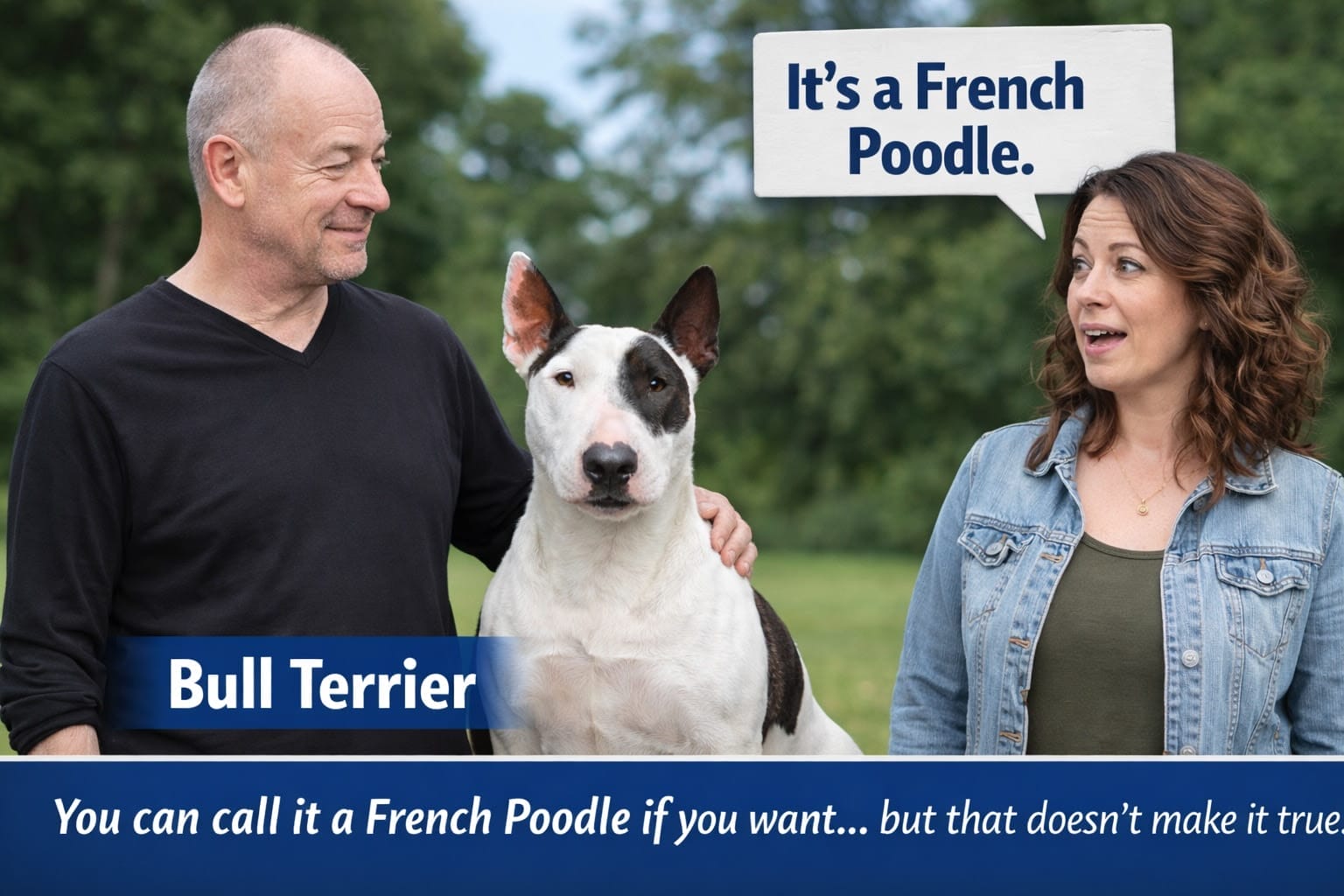
Years ago, I was walking my bull terrier, Lockjaw, when a woman approached me and said, “Nice bulldog.” I told her that he was actually a bull terrier. “Yeah,” she replied. “I call them English bulldogs.”
I said that she could call him a poodle if she wanted to, but Lockjaw was, in fact, a bull terrier. Reality does not change just because someone prefers a different label, no matter how confident they sound when they say it.
Precision of language is important.
Imagine if your cardiologist referred to your right ventricle as your “right Volkswagen” simply because that was what he liked to call it. You would probably find a new doctor very quickly, and rightly so. At some point, accuracy stops being optional and starts being a matter of trust and competence.
But having said all of this, I now arrive at the rather surprising point of this newsletter.
Sometimes words do not matter at all.
In the world of hypnosis, there are ongoing discussions about whether hypnosis is a state, meaning something one is in, or a process, meaning something one is doing.
My answer to that question has always been a resounding yes. Both descriptions are useful depending on context. Unless you are writing a dissertation on the subject, who really cares?
There is, however, an even more common argument, and it is one that causes some hypnotists to become so angry that they practically lose their minds. This is the debate about whether trance and hypnosis are the same thing or two completely different phenomena.
I was once warned by a psychotherapist to be careful about what I said around a couple of young street hypnotists. Apparently, if I used the word trance when I really meant hypnosis, they would jump down my throat.
You can imagine how concerned I was. LOL.
The modern idea, at least in some circles, is that hypnosis is something you do to someone, such as when a hypnotherapist works with a client. Trance, on the other hand, is supposedly something that happens on its own, like zoning out while daydreaming or driving on autopilot.
This distinction might sound silly, and I think it is. Yet there are hypnotists who argue endlessly about it, as though it were a crucial requirement for doing effective work. They write absurdly long online essays and Facebook posts about it, as if they are rehearsing for a TED Talk, because it feels that important to them.
But does it really matter?
Earlier I said that pronouncing hypnotist as hypMA-tist is sloppy and simply wrong. That is a matter of basic literacy and professional competence. The trance versus hypnosis debate is an entirely different thing.
It is an attempt to nail down a distinction that does not actually matter in real world practice. Hypnotists work with trance states, whether those states arise intentionally or naturally. Clients respond to experience, not terminology. The nervous system does not care what label you attach to what is happening in the moment.
The bottom line is this.
Whether you call it trance or hypnosis, the effect is the same.
And I believe it is far more important to help people than to get sidetracked into a pointless argument that improves nobody’s life in any meaningful way.
And you are, of course, free to disagree with me…
- Mike Mandel
Ready to Master Hypnosis?
If you're serious about truly mastering hypnosis, you've just found the right place.
At the Mike Mandel Hypnosis Academy, we don’t rely on scripts. You'll learn the core principles that make hypnosis truly work—so you can adapt, improvise, and create lasting change with real confidence.
Whether you’re brand new to hypnosis or already a seasoned practitioner, you’ll gain the tools and deep understanding you need to take your hypnotic skills to the next level.
As a member, you’ll also unlock 24/7 access to our exclusive online practice rooms—a place where hypnotists from around the world meet to practice, experiment, and grow together in a supportive, feedback-rich environment.
Click here to join the Mike Mandel Hypnosis Academy today—and experience the difference between reading scripts and becoming a true hypnotist. Just $1 to get started.