
He was a “bad subject” and could never be hypnotized…
Or at least, that’s what he told me, when he came into the small Toronto clinic where I did therapy.
He had that slightly guarded look people get when they’ve already been measured, tested, labelled, and found wanting. Somewhere along the way, someone had convinced this man that hypnosis worked for other people, but not for him. He had tried before, apparently, and it hadn’t gone well. Now he was carrying around this ridiculous little diagnosis, as though “bad subject” was a real condition, like hepatitis or hay fever.
Forty minutes later, he opened his eyes after a powerful, deep, and responsive trance experience, and said, “I had no idea I could do that…”
But of course he could. He was a human being.
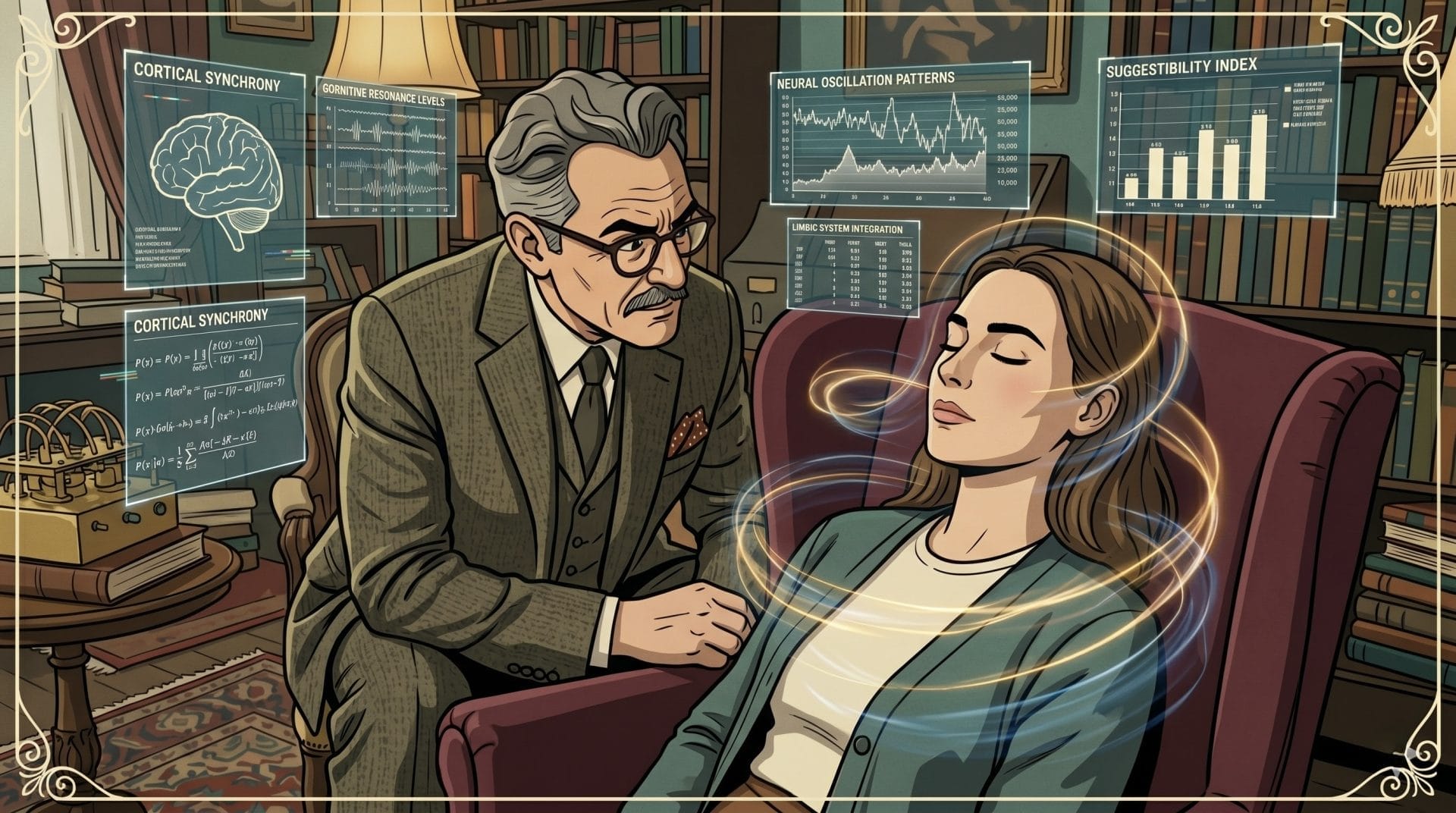
Somewhere along the line, hypnosis got infected with hypnotic depth scales: Davis-Husband, Friedlander-Sarbin, LeCron-Bordeaux, Harvard, Stanford, and all the other impressive-sounding attempts to make hypnosis look more scientific by attaching numbers to it. The result was a living interpersonal interaction being treated as though it was a measuring stick, with subjects ranked, sorted, and labelled according to where they supposedly belonged.
I understand why researchers did this. They wanted to study hypnosis, measure something, compare subjects, publish papers, create norms, and show that hypnosis could be examined in a laboratory. There is nothing wrong with wanting to study something carefully. The trouble begins when the map starts pretending to be the territory, and before long, the territory has to apologize for not looking enough like the map.
A lot of these procedures involved giving the same induction, usually from a recording, to a group of people, and then counting and checking who responded to which suggestions. That’s like playing a recording of one joke to a hundred people, and then deciding who has a sense of humour based on who laughs. Maybe the joke was badly told. Maybe it was the wrong joke for that group. Maybe the timing was off. Maybe the room was cold. Maybe the people were self-conscious. Maybe the joke required a certain cultural reference. Maybe some people found it funny but did not laugh out loud.
And maybe humour is not a fixed substance, existing inside a person at a measurable level from 1 to 20.
Hypnosis is no different. The old scales gave us the idea that some people are good subjects, some are average subjects, and some poor souls are bad subjects. Low hypnotizable. Resistant. Difficult. Refractory. Unresponsive. The hypnotic equivalent of a wet blanket on a fire. This isn't just wrong, it is damaging, because once a hypnotist believes he has a bad subject, the hypnotist has an excuse.
The subject did not respond, so the subject must be the problem. The induction failed, so the subject must be resistant. The person didn't fit the script, so clearly they are one of those difficult people who “cannot be hypnotized.” Meanwhile, the hypnotist may have simply droned on about relaxation in a monotonous voice, while the subject sat there wondering when something interesting was going to happen.
But too bad. This was yet another poor hypnosis subject.
What a convenient little escape hatch for the hypnotist.
The scales also attempted to put trance phenomena into tidy sequences. This phenomenon happens at level 7. That phenomenon shows up at level 16. This response means light trance. That response means medium trance. Over here we have somnambulism. Over there we have the little brass plaque that says “deep hypnosis.” It is all very neat, and that is precisely the problem. Human consciousness is not neat in that way, because there’s always individual variability. People are not made by cookie cutters.
It seems to me that these scales are an attempt to digitize something that is essentially analogical. Human consciousness does not move like an elevator stopping at numbered floors. People drift, respond, imagine, resist, soften, engage, associate, dissociate, focus, defocus, remember, forget, laugh, cry, surprise themselves, and then suddenly do something extraordinary because the right idea arrived in the right way at the right moment. That isn’t a staircase. It is much more like a dance.
And if you are trying to lead a dance by staring at a clipboard, counting foot placements, and muttering, “Ah yes, she is now at ballroom responsiveness level 4,” you are missing the dance entirely.
I have not had a bad subject in at least 25 or 30 years. That is not because I only work with unusually gifted subjects, or people who already know how to go into trance. It is because I stopped thinking in that ridiculous way. I teach my students that when they understand hypnosis is a psychological conversation, bad subjects simply disappear, and generally go to find and disappoint other hypnotists…
Now that doesn’t mean everyone responds in the same way. Human beings bring different personal histories, expectations, fears, curiosities, habits, and ways of paying attention into the hypnotic process. One person may need a clear explanation before relaxing into the experience, while another responds best when the conscious mind is pleasantly overloaded and no longer trying to supervise everything. Someone else may need humour, or reassurance, or a more direct approach. The point is that these differences are not defects in the subject. They are information for the hypnotist.
The hypnotist’s job is not to test the person until they fail. The hypnotist’s job is to notice, adapt, and respond. There are no bad subjects among normal people. There are only poorly trained hypnotists who try to force human beings into slots, scales, cubbyholes, and categories.
This is why we train our students to pay attention to the person in front of them, rather than staring at a script, a hypnotic depth scale, or some ancient list of phenomena that says time distortion belongs on one shelf, and amnesia belongs on another. Pay attention to their breathing, their eyes, the changes in skin tone, the micro-movements, the hesitation, and the way the conscious mind tries to stay in charge while another part of the person is already beginning to respond.
This is why a good hypnotist is constantly feeding the person’s own responses back to them. If the breathing changes, you mention it. If their eyelids flutter, you use that. If their hands grow still, or the shoulders relax, or the face smooths out, you bring that into the conversation: “And as your breathing settles like that, you can allow yourself to drift a little further.” The subject is not being pushed through a numbered sequence. They are being guided by their own responses, moment by moment, so the trance is developed and amplified, based on what is actually happening, instead of what some scale says should be happening.
That is where hypnosis comes alive: in the psychodynamic relationship between the hypnotist and the subject, in the feedback passing back and forth, and in the small changes that tell you where to go next. A skilled hypnotist is not imposing a model onto the person. They’re engaging a living person, watching the responses, and shaping the next words around what is already beginning to happen.
So stop testing people to find out whether they are bad subjects. Stop telling people they are resistant because they did not respond to your favourite induction. Stop labelling them because they did not climb or descend an imaginary staircase in the approved order. Respond to a human being instead of a scale.
That is the real art of hypnosis, and it is also the real responsibility of the hypnotist. The moment you stop asking, “How hypnotizable is this person?” you can begin asking a much better question: “How can I utilize this person’s response, right now?”
That changes everything. It turns hypnosis back into a psychological conversation. It puts the hypnotist’s attention where it belongs, on the person, the relationship, the feedback they’re giving you, and the next useful step. And when you do that, the old idea of the “bad subject” simply vanishes.
Not because you proved the research and the depth scales wrong, but because you stopped staring at a scale or a script, in order to see and interact with a living person in front of you.
- Mike Mandel
Ready to Master Hypnosis?
If you're serious about truly mastering hypnosis, you've just found the right place.
At the Mike Mandel Hypnosis Academy, we don’t rely on scripts. You'll learn the core principles that make hypnosis truly work—so you can adapt, improvise, and create lasting change with real confidence.
Whether you’re brand new to hypnosis or already a seasoned practitioner, you’ll gain the tools and deep understanding you need to take your hypnotic skills to the next level.
As a member, you’ll also unlock 24/7 access to our exclusive online practice rooms—a place where hypnotists from around the world meet to practice, experiment, and grow together in a supportive, feedback-rich environment.
Click here to join the Mike Mandel Hypnosis Academy today—and experience the difference between reading scripts and becoming a true hypnotist. Just $1 to get started.